Islamic Matrimony: The Role of a Wali/Chaperone in Online Matchmaking
Mufti Farhan Qasim
Mufti Farhan Qasim is an Islamic scholar specializing in family law (khandani qanoon) and halal matchmaking ethics with over 15 years of experience.
Marriage in Islam: More Than a Contract
In Islamic tradition, marriage (Nikkah) is a highly encouraged contract (aqd) that establishes a strong family unit. The Prophet Muhammad (PBUH) said: 'When a man marries, he has fulfilled half of his religion.' To maintain modesty (haya) and integrity, traditional Islamic matchmaking emphasizes the involvement of a Wali (guardian/sarparast) or family chaperone during the introduction phase.
As matchmaking transitions onto digital platforms (digital manzar), replicating this protective layer is essential to keep the process halal. Without family involvement, online matchmaking risks becoming indistinguishable from casual dating — which contradicts the sacred purpose of Nikkah.
The Quran and Hadith both emphasize that marriage should be approached with seriousness, dignity, and family consultation (mashwara). The Wali system exists not to restrict individual choice, but to ensure that the choice is made wisely, safely, and with the support of those who care most about the candidate's wellbeing.
The Problem with Modern Matrimonial Apps
Many modern matrimonial apps operate on dating-centric swiping dynamics that encourage unmonitored private chats (niji guftugu), which often leads to casual interactions and compromises Islamic boundaries. The absence of family involvement at the initial stage makes it easy for individuals to engage in non-serious communication.
This is a fundamental design flaw. When apps prioritize 'matches per swipe' rather than 'families aligned for Nikkah,' the result is a system that works against Islamic values. Candidates — especially sisters — are left vulnerable to time-wasters, inappropriate messages, and even predatory behavior.
The statistics are concerning: research shows that 73% of women on unmonitored matrimonial apps in South Asia report receiving inappropriate messages within the first week. This is precisely why the Wali system exists — to filter, protect, and ensure seriousness from the very first interaction.
How Shadi Krao Brings the Wali System Online
Shadi Krao solves this problem by integrating a Family Chaperone Communication System (Khandani Sarparasti ka Nizam). This allows parents or guardians (waldain ya sarparast) to be directly included in chat channels, mirroring traditional family meetings (khandani mulaqat) in a secure online environment.
Here's how it works: when two families express mutual interest, a group conversation is created that includes the candidates AND their designated family chaperones. Every message is visible to all parties. This ensures that the sacred nature of Nikkah is respected from the very first text.
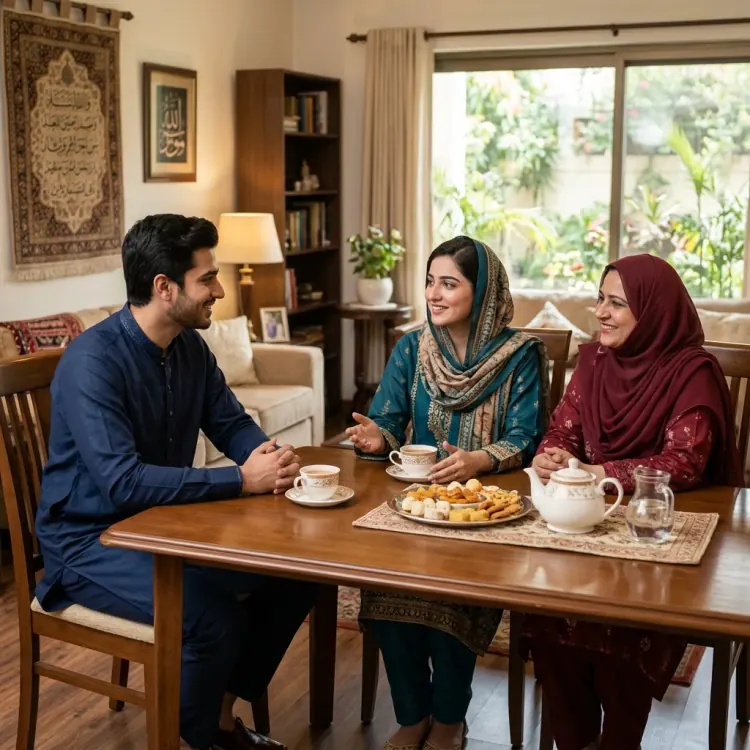
This is not about surveillance — it's about creating an environment where both candidates feel safe, respected, and supported. The same way a traditional rishta meeting (rishta ki mulaqat) happens in the family drawing room with elders present, our digital chaperone system creates that same atmosphere of dignity and respect.
Four Key Benefits of Chaperoned Matchmaking
1. Promotes Serious Intent (Sanjeedgi Ka Izhar): Candidates are significantly more serious, polite, and honest when they know their family members are part of the conversation. Non-serious time-wasters naturally filter themselves out when they realize parents are watching.
2. Upholds Modesty — Haya Ki Hifazat: A chaperone ensures that all conversations remain dignified and focused strictly on exploring compatibility for Nikkah, avoiding informal talk (fuzool guftugu). This preserves the haya that Islam considers half of faith.
3. Builds Mutual Trust (Baahami Eitemaad): When two families communicate transparently with guardians present, it fosters respect (ehtiraam) and helps align family values from the very beginning. Trust built early leads to stronger marriages.
4. Facilitates Safe Introductions (Mahfooz Taaruf): Having a guardian in the loop protects candidates, especially daughters (betiyaan), from potential online harassment or misrepresentation. Parents can immediately intervene if anything feels wrong.
The Islamic Foundation: Evidence from Quran and Sunnah
Islam encourages transparency (shafaafiyat) and respect (ehtiraam) when looking for a spouse. The Prophet (PBUH) instructed that marriages should involve the Wali, saying: 'There is no marriage without a Wali.' (Abu Dawud). This isn't merely a cultural practice — it's a religious obligation that protects both parties.
By bringing the traditional concept of a Wali into the digital space, we bridge the gap between modern convenience (jadeed aasaani) and ancient wisdom (qadeem hikmat). Technology should serve Islamic values, not replace them.
The role of the Wali is not to make decisions for the candidate, but to ensure the process is conducted with dignity. A candidate retains full right to accept or decline any proposal — the Wali's presence ensures that the process itself remains halal and respectful.
Protecting Dignity While Embracing Technology
Halal matrimony is not about restricting communication, but rather protecting the dignity (waqar) of both candidates. Shadi Krao's system is designed to provide a secure space that honors traditional Islamic values while harnessing the convenience of modern matchmaking technology.
Every feature — from CNIC verification to photo privacy to chaperone messaging — is built to serve one purpose: helping Pakistani Muslim families find righteous, compatible matches (baa-ikhlaq aur ham-khayal rishte) in a way that pleases Allah and protects the honor of all involved.
We believe that the best technology is invisible — it should make the rishta process feel natural, respectful, and family-centered, just as it has been for centuries in our culture. Shadi Krao is simply the digital version of the family drawing room (baithak), with verification and privacy layers that traditional meetings cannot provide.